
Exploring the Impact and Potential of Real World Asset Coins in the Crypto Market
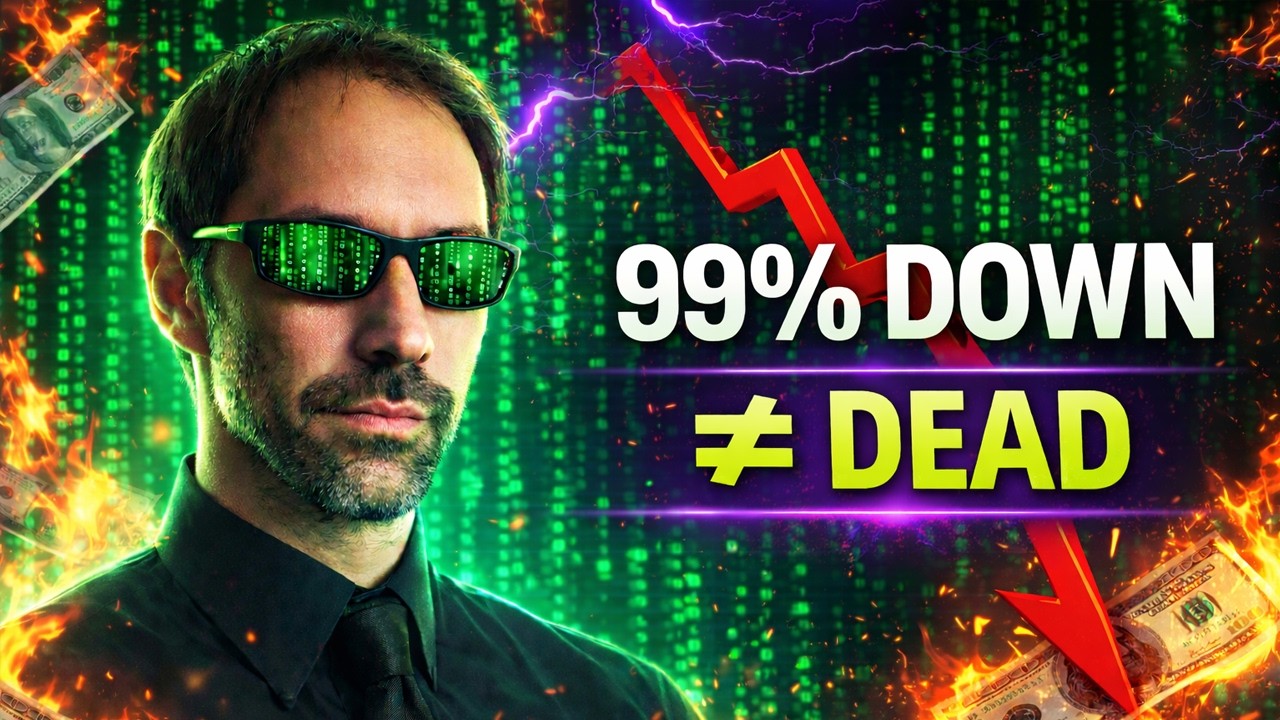
Good morning, CryptoDents. How are you doing this fine morning? I’m doing great. It’s a beautiful sunny morning in Madrid. I was on X and saw a post asking, “How bad is RWA altcoin all-time high damage?” We’re looking at RWA coins, which are specifically designed for real world assets. This narrative is crucial for crypto adoption, as it will elevate blockchain to a new level. We’re already witnessing massive adoption, with real world assets being integrated into the blockchain.
The Issue with Real World Asset Coins
The problem isn’t the narrative itself, which is very important, but rather the real world asset coins. Do they have any intrinsic value? For instance, let’s consider Mantra. It experienced a significant dump. Initially, it pumped nicely from the beginning of January 2024, following a good altcoin season at the end of 2023. It reached over $8, but after moving to a new network, it dropped to 6 cents and is now down to 1 cent. So, from an all-time high of over $8, it plummeted to 1 cent.
Then there’s Ono, a coin I’m quite familiar with. Ono was heavily hyped as an important real world asset coin. It went up over $2 but is now at two and a half cents. Despite its hype and large market cap, it has crashed significantly. The issue isn’t the real world asset narrative but the coin itself.
The Dominance of Major Coins
In crypto, the major coins, those with the most adoption and highest market cap, are dominating. It’s not about creating a coin for gaming or real world assets; the big coins are absorbing everything. While there might be exceptions, this is the case for real world assets. We should focus on the coins actually integrating real world assets, as these are the ones worth investing in.
The Growth of Tokenized Real World Assets
Tokenized real world assets already represent a $35 to $50 billion market and are growing rapidly. However, this growth is concentrated on a few chains, primarily the big ones. The largest categories include private credit loans, US treasuries, money market funds, stable coins, and real estate funds. The biggest chain, as you might expect, is Ethereum. Ethereum is currently the clear leader in this space.
And I don’t own any Ethereum, actually. But maybe I should. I hate Ethereum because it’s always been so slow and expensive, although it’s getting faster. Ethereum hosts BlackRock’s stuff, Ono Finance, and most tokenized funds and credit protocols. It’s strong in compliance tooling, institutional custody integrations, and is the main chain for tokenized US Treasury data sets.
The Providence Blockchain
This is really interesting because we have a chain that probably no one has heard of: the Providence blockchain. It’s quite significant and was built by Figure. If you look at the top coins, Figure is number nine, and it’s been there for a while. I always found it strange, thinking, “Who is this?” It’s like some kind of mortgage company that tokenizes mortgages or something. According to this, the Providence blockchain holds 75% of tokenized real-world assets by volume, supposedly.
Stellar’s Second Life
Then we have Stellar, which has been around for a long time. It’s at number 22 now. I was critical of Stellar because I didn’t think it was getting much adoption in recent years. Stellar was around before I got into crypto in 2021, and I didn’t think it was being used much. However, in terms of corporate stuff and real-world assets, Stellar is up there. It has a lot of tokenized treasuries, payments, and strong TradFi partnerships. It’s one of the largest regulated real-world asset rails outside of Ethereum. In my opinion, this has been a second life for Stellar because of real-world assets.
Polygon’s Potential
Number four is Polygon. It’s heavily used by securitized funds, such as Hamilton Lane funds, and is institutional-friendly and cheaper than Ethereum. Everything’s cheaper than Ethereum. Polygon is way down here; I’ve mentioned it in my videos many times. It went down to 72, even 90. Polygon used to be in the top 20 all the time and held well at the beginning of the bear market in 2022 and 2023, but then it started slipping. However, Polygon is doing very well, with a lot of real-world assets and adoption. I think Polygon is very cheap at its current price. It should be in the top 25 or 30 for sure. I have a big bag of Polygon. My bags aren’t huge—I’m not a millionaire—but I have a lot of Polygon because I believe it will rise significantly when the market turns.
Solana’s Growth
Number five is Solana. I actually thought Solana would be more like number two. It’s growing fast in tokenized treasuries and institutional pilots. It’s smaller than Ethereum but accelerating. It’s not dominant yet, but it’s growing.
Avalanche and Institutional Use
Avalanche is one of my favorite investments. It’s gaining traction, especially with institutional subnets and tokenized funds. I’m a big fan of Avalanche and its potential in these areas.
XRP Ledger vs. XRP
Then there’s the XRP Ledger, or XRPL. It’s important to note that I’m not talking about XRP itself, which was originally intended for money transfers. That’s the promise behind XRP, supported by a large community known as the XRP army. However, XRP isn’t widely used for money transfers anymore, as many have shifted to stablecoins and other blockchain solutions. Despite this, the XRP Ledger is gaining some traction for tokenized assets, compliance, and asset issuance. The key question is whether XRPL requires the XRP token. I’ve read conflicting information on this. While the brand might benefit XRP, I’m not currently holding any, nor am I part of the XRP army. But I respect those who are; everyone should pursue their own path to success.
Algorand’s Decline
Algorand has seen a significant decline, but it still holds a lot of tokenized assets and is involved in government and institutional pilots. I used to own some Algorand back in 2021, and I still have a bit of everything. Algorand is currently ranked 69th, but it’s still on my radar.
Chainlink’s Ubiquity
Chainlink, while not a blockchain itself, is crucial because it’s used in a wide variety of applications. It’s now my second-largest holding. Solana is my biggest due to its significant price increase after I bought it cheaply. However, Chainlink has become a major part of my portfolio because of its widespread use.
Other Notable Networks
There are several other networks worth mentioning. Cosmos, Polkadot, Plume Network, Red Belly Network, and Hedera are all significant players. Hedera, in particular, is a large blockchain that performs well, and many people are fond of it. I don’t currently own any HBAR, but I’m considering it for diversification.
Tezos and Near Protocol
Tezos was once a top coin but has dropped significantly. Celo and Near Protocol are also noteworthy. I have a Near bag, and it’s now AI-focused, ranking 48th in market cap. Near was mentioned among the top five chains with the most development or wallet usage, though I’m not sure which. It deserves a higher market cap ranking.
Arbitrum and Others
Finally, there’s Arbitrum and others like Bass. These networks continue to evolve and offer potential opportunities for investment and growth.
Arbitron was a well-known layer 2 for Ethereum, and those are the coins that are actually gaining adoption. Let’s take another look at RWAXYZ because they have a good list as well. It’s a great reference, so let’s bookmark it. Someone pointed this out to me on X the other day when I was criticizing XRP. They said, “No, no, look, they’re here in the list.” So, we have Ethereum at number one. Here, they have BNB Chain, which wasn’t mentioned before, but as I said, these sources aren’t perfect. There’s Zync era, XRP—oh, wait, it keeps changing. What’s going on here? Why did it just change on me? Okay, more or less. Wait, networks. Stop changing. Stop changing. Okay, we have Ethereum, BNB, Solana, Stellar. We saw these ones already. Liquid Network just changed on me. We have XRP, Polygon, Avalanche again, and Optos. So, we have a lot of repetition from the list we already had.
Basically, you don’t need to buy RWA tokens. You just want to buy the tokens that are getting adoption, and those are the big players: Solana, Ethereum, Avalanche, Polygon, and others. That’s it for today. I’m changing my strategy a bit. I’m going to focus more on learning and trying to find points to teach so that I feel like I’m contributing more than just commenting on news. I hope you all have a great day, and hopefully, I will see you on Monday.
Suscribe to the Blog!
Don’t rely on centralized systems. Subscribe directly at CryptoD3gen and receive the updates by email.
Exploring the Impact and Potential of Real World Asset Coins in the Crypto Market
Good morning, CryptoDents. How are you doing this fine morning? I’m doing great. It’s a beautiful sunny morning in Madrid. I was on X and saw a post asking, “How bad is RWA altcoin all-time high damage?” We’re looking at RWA coins, which are specifically designed for real world assets. This narrative is crucial for crypto adoption, as it will elevate blockchain to a new level. We’re already witnessing massive adoption, with real world assets being integrated into the blockchain.
The Issue with Real World Asset Coins
The problem isn’t the narrative itself, which is very important, but rather the real world asset coins. Do they have any intrinsic value? For instance, let’s consider Mantra. It experienced a significant dump. Initially, it pumped nicely from the beginning of January 2024, following a good altcoin season at the end of 2023. It reached over $8, but after moving to a new network, it dropped to 6 cents and is now down to 1 cent. So, from an all-time high of over $8, it plummeted to 1 cent.
Then there’s Ono, a coin I’m quite familiar with. Ono was heavily hyped as an important real world asset coin. It went up over $2 but is now at two and a half cents. Despite its hype and large market cap, it has crashed significantly. The issue isn’t the real world asset narrative but the coin itself.
The Dominance of Major Coins
In crypto, the major coins, those with the most adoption and highest market cap, are dominating. It’s not about creating a coin for gaming or real world assets; the big coins are absorbing everything. While there might be exceptions, this is the case for real world assets. We should focus on the coins actually integrating real world assets, as these are the ones worth investing in.
The Growth of Tokenized Real World Assets
Tokenized real world assets already represent a $35 to $50 billion market and are growing rapidly. However, this growth is concentrated on a few chains, primarily the big ones. The largest categories include private credit loans, US treasuries, money market funds, stable coins, and real estate funds. The biggest chain, as you might expect, is Ethereum. Ethereum is currently the clear leader in this space.
And I don’t own any Ethereum, actually. But maybe I should. I hate Ethereum because it’s always been so slow and expensive, although it’s getting faster. Ethereum hosts BlackRock’s stuff, Ono Finance, and most tokenized funds and credit protocols. It’s strong in compliance tooling, institutional custody integrations, and is the main chain for tokenized US Treasury data sets.
The Providence Blockchain
This is really interesting because we have a chain that probably no one has heard of: the Providence blockchain. It’s quite significant and was built by Figure. If you look at the top coins, Figure is number nine, and it’s been there for a while. I always found it strange, thinking, “Who is this?” It’s like some kind of mortgage company that tokenizes mortgages or something. According to this, the Providence blockchain holds 75% of tokenized real-world assets by volume, supposedly.
Stellar’s Second Life
Then we have Stellar, which has been around for a long time. It’s at number 22 now. I was critical of Stellar because I didn’t think it was getting much adoption in recent years. Stellar was around before I got into crypto in 2021, and I didn’t think it was being used much. However, in terms of corporate stuff and real-world assets, Stellar is up there. It has a lot of tokenized treasuries, payments, and strong TradFi partnerships. It’s one of the largest regulated real-world asset rails outside of Ethereum. In my opinion, this has been a second life for Stellar because of real-world assets.
Polygon’s Potential
Number four is Polygon. It’s heavily used by securitized funds, such as Hamilton Lane funds, and is institutional-friendly and cheaper than Ethereum. Everything’s cheaper than Ethereum. Polygon is way down here; I’ve mentioned it in my videos many times. It went down to 72, even 90. Polygon used to be in the top 20 all the time and held well at the beginning of the bear market in 2022 and 2023, but then it started slipping. However, Polygon is doing very well, with a lot of real-world assets and adoption. I think Polygon is very cheap at its current price. It should be in the top 25 or 30 for sure. I have a big bag of Polygon. My bags aren’t huge—I’m not a millionaire—but I have a lot of Polygon because I believe it will rise significantly when the market turns.
Solana’s Growth
Number five is Solana. I actually thought Solana would be more like number two. It’s growing fast in tokenized treasuries and institutional pilots. It’s smaller than Ethereum but accelerating. It’s not dominant yet, but it’s growing.
Avalanche and Institutional Use
Avalanche is one of my favorite investments. It’s gaining traction, especially with institutional subnets and tokenized funds. I’m a big fan of Avalanche and its potential in these areas.
XRP Ledger vs. XRP
Then there’s the XRP Ledger, or XRPL. It’s important to note that I’m not talking about XRP itself, which was originally intended for money transfers. That’s the promise behind XRP, supported by a large community known as the XRP army. However, XRP isn’t widely used for money transfers anymore, as many have shifted to stablecoins and other blockchain solutions. Despite this, the XRP Ledger is gaining some traction for tokenized assets, compliance, and asset issuance. The key question is whether XRPL requires the XRP token. I’ve read conflicting information on this. While the brand might benefit XRP, I’m not currently holding any, nor am I part of the XRP army. But I respect those who are; everyone should pursue their own path to success.
Algorand’s Decline
Algorand has seen a significant decline, but it still holds a lot of tokenized assets and is involved in government and institutional pilots. I used to own some Algorand back in 2021, and I still have a bit of everything. Algorand is currently ranked 69th, but it’s still on my radar.
Chainlink’s Ubiquity
Chainlink, while not a blockchain itself, is crucial because it’s used in a wide variety of applications. It’s now my second-largest holding. Solana is my biggest due to its significant price increase after I bought it cheaply. However, Chainlink has become a major part of my portfolio because of its widespread use.
Other Notable Networks
There are several other networks worth mentioning. Cosmos, Polkadot, Plume Network, Red Belly Network, and Hedera are all significant players. Hedera, in particular, is a large blockchain that performs well, and many people are fond of it. I don’t currently own any HBAR, but I’m considering it for diversification.
Tezos and Near Protocol
Tezos was once a top coin but has dropped significantly. Celo and Near Protocol are also noteworthy. I have a Near bag, and it’s now AI-focused, ranking 48th in market cap. Near was mentioned among the top five chains with the most development or wallet usage, though I’m not sure which. It deserves a higher market cap ranking.
Arbitrum and Others
Finally, there’s Arbitrum and others like Bass. These networks continue to evolve and offer potential opportunities for investment and growth.
Arbitron was a well-known layer 2 for Ethereum, and those are the coins that are actually gaining adoption. Let’s take another look at RWAXYZ because they have a good list as well. It’s a great reference, so let’s bookmark it. Someone pointed this out to me on X the other day when I was criticizing XRP. They said, “No, no, look, they’re here in the list.” So, we have Ethereum at number one. Here, they have BNB Chain, which wasn’t mentioned before, but as I said, these sources aren’t perfect. There’s Zync era, XRP—oh, wait, it keeps changing. What’s going on here? Why did it just change on me? Okay, more or less. Wait, networks. Stop changing. Stop changing. Okay, we have Ethereum, BNB, Solana, Stellar. We saw these ones already. Liquid Network just changed on me. We have XRP, Polygon, Avalanche again, and Optos. So, we have a lot of repetition from the list we already had.
Basically, you don’t need to buy RWA tokens. You just want to buy the tokens that are getting adoption, and those are the big players: Solana, Ethereum, Avalanche, Polygon, and others. That’s it for today. I’m changing my strategy a bit. I’m going to focus more on learning and trying to find points to teach so that I feel like I’m contributing more than just commenting on news. I hope you all have a great day, and hopefully, I will see you on Monday.
Leave A Comment
You must be logged in to post a comment.
Suscribe to the Blog!
Don’t rely on centralized systems. Subscribe directly at CryptoD3gen and receive the updates by email.