
Crypto Market Update: Regulation Chaos, Banks vs Onchain Finance, and Why Narratives Come and Go
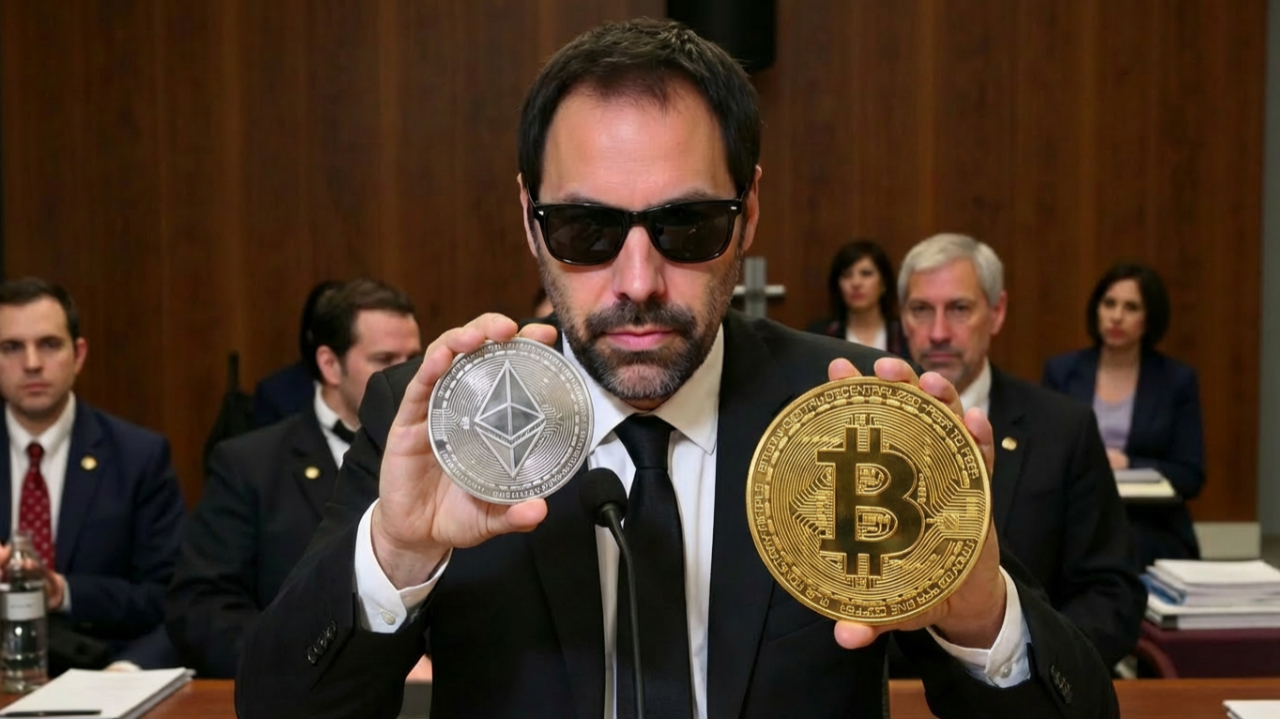
Good afternoon, Crypto Degens. The market today is down around 1.7%, and as usual, that doesn’t stop some absolutely crazy things from happening.
For example, one of the top gainers is a memecoin called Gastown, up around 500%. No website. No X profile. No Telegram. Nothing. Someone just throws it on pump.fun and it goes straight to the moon. That’s the state of the market right now.
Regulation drama and the Clarity Act
Paul Barron summed it up well when he said the Clarity Act needs work now and a pause tomorrow. There’s still a lot to iron out, and people should keep voicing their opinions to their senators. He’s not happy. I’m not happy. And a lot of people aren’t happy either.
As Cryptos ‘R’ Us has said before, no bill is better than a bad bill. CNBC explained why the crypto market structure markup got pulled, and the reasons are serious.
Coinbase pulled its support, saying the bill would actually worsen the status quo. The big issues were reduced CFTC authority, more power for the SEC, and limits on rewards for users. That last point matters, because it could prevent users from earning yields on stablecoins.
At the same time, major banks complained that the same provisions were too favorable to crypto and could pull deposits out of the banking system. Honestly, that sounds like competition working as intended. Better returns on stablecoins would naturally attract capital.
The real problem is that banks don’t want competition. They don’t want stablecoins paying yields because it threatens their business model. This isn’t about protecting users. It’s about protecting banks.
Banks vs onchain finance
Cal Dups from Crypto Banter said it perfectly: if banks can lend but crypto firms can’t, that’s not regulation, that’s protection. This has stopped being crypto versus regulators. Now it’s banks versus onchain finance.
Whoever wins this fight will decide who gets to offer financial products in the next cycle. Banks are clearly trying to slow everything down instead of innovating. They really need to get with the program.
The CEO of Bank of America even warned that interest-bearing stablecoins could drain up to six trillion dollars from U.S. banks. Gary Cardone’s response was simple and accurate: yes, exactly. That’s called competition.
Tokenization and why it matters
Another major issue in the bill is tokenization. There were provisions that could limit or block tokenization, and that would be a huge problem. Tokenization is one of the most important use cases for blockchain technology, and restricting it would be a massive step backward.
Brad Garlinghouse said the market structure bill isn’t perfect but is better than nothing. I completely disagree. These aren’t small details. These are fundamental problems. You can’t just pass any bill to say you passed a bill.
All markets onchain?
Crypto Rover shared a wild quote: SEC chair Paul Atkins said all U.S. markets could be onchain within two years. That only happens if the Clarity Act actually allows it. If it doesn’t, then this is just empty talk.
Senator David McCormick is urging lawmakers to move fast, warning that without clear legislation, capital and innovation will continue to leave the U.S. Regulatory clarity isn’t optional anymore. Market structure has to pass, but it has to be done right.
Privacy coins and fading narratives
Ran Neuner said privacy is quietly becoming the biggest trade of 2026. ZEC is up massively, and XMR is breaking out. Privacy is being reframed from something suspicious into a basic human right.
That said, narratives come and go. I remember Oasis. It was huge at one point. Secret Network too. Both pumped hard, and now almost nobody talks about them. That’s how crypto works.
Narratives explode, run for a few months, maybe hit the top 100, and then fade. Some survive, most don’t. That’s why I prefer focusing mostly on solid projects.
What I prefer to hold
I personally like sticking with strong, widely used chains. Bitcoin, Ethereum, Solana, and Chainlink. I don’t hold much Bitcoin or Ethereum right now, but these are still the foundations.
There are also chains with strong metrics that are heavily undervalued. NEAR is close to its lows despite ranking high in users and developers. There are several blockchains like that which, in my opinion, are simply overcorrected.
Predictions, influencers, and reality
Some people say that everyone expecting new Bitcoin all-time highs in 2026 proves the top is already in. Others say breaking above certain levels will create a massive parabolic move. The truth is simple: nobody knows.
I don’t make predictions because they’re almost always wrong. Even big influencers with huge audiences get it wrong all the time. Making constant predictions just makes you look bad.
That said, with adoption increasing, incoming liquidity, and supportive regulation in the U.S., the long-term environment still looks positive. Altcoins have been in a brutal bear market for a long time, and many are extremely depressed.
Adoption is still growing
Rhode Island introduced a bill to remove taxes on small Bitcoin payments. That’s real adoption. A large grocery chain is offering discounts for Bitcoin payments, even if it’s just one store for now.
Personally, I’ve seen these stores in France many times, and it’s interesting to see even small steps toward real-world usage.
Inflation, debt, and the bigger picture
Jim Cramer says Bitcoin reaching one million dollars is improbable. With inflation, nothing is improbable. Inflation changes everything.
Meanwhile, the U.S. keeps sending borrowed money around the world while being trillions in debt. It makes no sense. That frustration is part of why people are looking at crypto as an alternative.
Memecoins, humor, and mindset
Yes, some memecoins like Dogecoin and Pepe will probably pump again if we get even a small altcoin run. Pepe has shown surprising staying power.
Not everything has to be serious. Some posts are just funny. Some don’t even make sense. That’s crypto.
What really stuck with me was a quote from Cody Sanchez: people dumber than you are winning simply because they started. You don’t need a perfect idea. You need to start, learn, and improve.
Conclusion
This market is chaotic, emotional, and unpredictable. Regulation matters, but bad regulation is worse than none at all. Narratives will keep coming and going, memecoins will keep doing crazy things, and nobody truly knows what the market will do next.
The best you can do is focus on quality, stay flexible, and actually start instead of waiting for perfect conditions.




Suscribe to the Blog!
Don’t rely on centralized systems. Subscribe directly at CryptoD3gen and receive the updates by email.
Crypto Market Update: Regulation Chaos, Banks vs Onchain Finance, and Why Narratives Come and Go
Good afternoon, Crypto Degens. The market today is down around 1.7%, and as usual, that doesn’t stop some absolutely crazy things from happening.
For example, one of the top gainers is a memecoin called Gastown, up around 500%. No website. No X profile. No Telegram. Nothing. Someone just throws it on pump.fun and it goes straight to the moon. That’s the state of the market right now.
Regulation drama and the Clarity Act
Paul Barron summed it up well when he said the Clarity Act needs work now and a pause tomorrow. There’s still a lot to iron out, and people should keep voicing their opinions to their senators. He’s not happy. I’m not happy. And a lot of people aren’t happy either.
As Cryptos ‘R’ Us has said before, no bill is better than a bad bill. CNBC explained why the crypto market structure markup got pulled, and the reasons are serious.
Coinbase pulled its support, saying the bill would actually worsen the status quo. The big issues were reduced CFTC authority, more power for the SEC, and limits on rewards for users. That last point matters, because it could prevent users from earning yields on stablecoins.
At the same time, major banks complained that the same provisions were too favorable to crypto and could pull deposits out of the banking system. Honestly, that sounds like competition working as intended. Better returns on stablecoins would naturally attract capital.
The real problem is that banks don’t want competition. They don’t want stablecoins paying yields because it threatens their business model. This isn’t about protecting users. It’s about protecting banks.
Banks vs onchain finance
Cal Dups from Crypto Banter said it perfectly: if banks can lend but crypto firms can’t, that’s not regulation, that’s protection. This has stopped being crypto versus regulators. Now it’s banks versus onchain finance.
Whoever wins this fight will decide who gets to offer financial products in the next cycle. Banks are clearly trying to slow everything down instead of innovating. They really need to get with the program.
The CEO of Bank of America even warned that interest-bearing stablecoins could drain up to six trillion dollars from U.S. banks. Gary Cardone’s response was simple and accurate: yes, exactly. That’s called competition.
Tokenization and why it matters
Another major issue in the bill is tokenization. There were provisions that could limit or block tokenization, and that would be a huge problem. Tokenization is one of the most important use cases for blockchain technology, and restricting it would be a massive step backward.
Brad Garlinghouse said the market structure bill isn’t perfect but is better than nothing. I completely disagree. These aren’t small details. These are fundamental problems. You can’t just pass any bill to say you passed a bill.
All markets onchain?
Crypto Rover shared a wild quote: SEC chair Paul Atkins said all U.S. markets could be onchain within two years. That only happens if the Clarity Act actually allows it. If it doesn’t, then this is just empty talk.
Senator David McCormick is urging lawmakers to move fast, warning that without clear legislation, capital and innovation will continue to leave the U.S. Regulatory clarity isn’t optional anymore. Market structure has to pass, but it has to be done right.
Privacy coins and fading narratives
Ran Neuner said privacy is quietly becoming the biggest trade of 2026. ZEC is up massively, and XMR is breaking out. Privacy is being reframed from something suspicious into a basic human right.
That said, narratives come and go. I remember Oasis. It was huge at one point. Secret Network too. Both pumped hard, and now almost nobody talks about them. That’s how crypto works.
Narratives explode, run for a few months, maybe hit the top 100, and then fade. Some survive, most don’t. That’s why I prefer focusing mostly on solid projects.
What I prefer to hold
I personally like sticking with strong, widely used chains. Bitcoin, Ethereum, Solana, and Chainlink. I don’t hold much Bitcoin or Ethereum right now, but these are still the foundations.
There are also chains with strong metrics that are heavily undervalued. NEAR is close to its lows despite ranking high in users and developers. There are several blockchains like that which, in my opinion, are simply overcorrected.
Predictions, influencers, and reality
Some people say that everyone expecting new Bitcoin all-time highs in 2026 proves the top is already in. Others say breaking above certain levels will create a massive parabolic move. The truth is simple: nobody knows.
I don’t make predictions because they’re almost always wrong. Even big influencers with huge audiences get it wrong all the time. Making constant predictions just makes you look bad.
That said, with adoption increasing, incoming liquidity, and supportive regulation in the U.S., the long-term environment still looks positive. Altcoins have been in a brutal bear market for a long time, and many are extremely depressed.
Adoption is still growing
Rhode Island introduced a bill to remove taxes on small Bitcoin payments. That’s real adoption. A large grocery chain is offering discounts for Bitcoin payments, even if it’s just one store for now.
Personally, I’ve seen these stores in France many times, and it’s interesting to see even small steps toward real-world usage.
Inflation, debt, and the bigger picture
Jim Cramer says Bitcoin reaching one million dollars is improbable. With inflation, nothing is improbable. Inflation changes everything.
Meanwhile, the U.S. keeps sending borrowed money around the world while being trillions in debt. It makes no sense. That frustration is part of why people are looking at crypto as an alternative.
Memecoins, humor, and mindset
Yes, some memecoins like Dogecoin and Pepe will probably pump again if we get even a small altcoin run. Pepe has shown surprising staying power.
Not everything has to be serious. Some posts are just funny. Some don’t even make sense. That’s crypto.
What really stuck with me was a quote from Cody Sanchez: people dumber than you are winning simply because they started. You don’t need a perfect idea. You need to start, learn, and improve.
Conclusion
This market is chaotic, emotional, and unpredictable. Regulation matters, but bad regulation is worse than none at all. Narratives will keep coming and going, memecoins will keep doing crazy things, and nobody truly knows what the market will do next.
The best you can do is focus on quality, stay flexible, and actually start instead of waiting for perfect conditions.
Leave A Comment
You must be logged in to post a comment.
Suscribe to the Blog!
Don’t rely on centralized systems. Subscribe directly at criptodegen.com and receive the updates by email.